
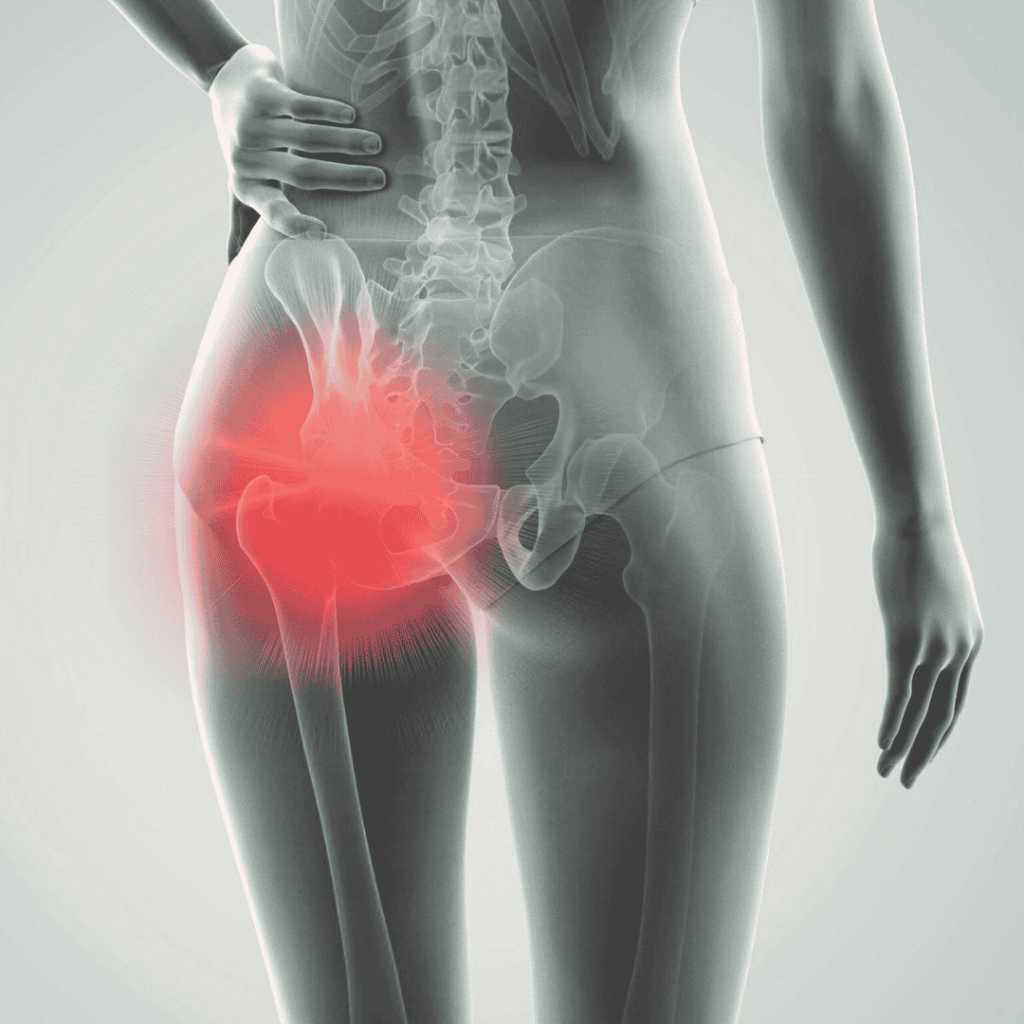
Total hip replacement is an established treatment for advanced hip osteoarthritis. It may also help selected other hip conditions when non-operative care no longer gives enough relief. The operation replaces a damaged ball-and-socket joint with prosthetic components.
Recovery after surgery matters as much as the operation itself. This hip replacement recovery timeline outlines the usual stages after the procedure. Timelines still vary. Age, pre-operative function, other medical conditions, surgical approach, implant position and rehabilitation all influence progress.
Most patients leave hospital within two to four days. Walking usually starts on the day of surgery or the next morning with the physiotherapy team. Most people then recover at home with outpatient or home-based physiotherapy. Routine inpatient rehabilitation is not required for every patient after primary total hip replacement. Home support and other medical conditions shape the discharge plan.
Where it is clinically suitable, a muscle-sparing posterior technique such as SPAIRE (Saving Piriformis And Internus, Repair of Externus) may be used. The approach is chosen after clinical and radiographic assessment. No single approach suits every patient.
Hip Replacement Recovery Timeline: Hospital to Six Weeks
The first weeks focus on pain and swelling, wound care, safe walking and confidence. Full weight-bearing is usually allowed at once, unless the surgeon advises otherwise. Patients start with a frame or crutches. They then move to a stick as balance and endurance improve.
Hip precautions, if used, are individual. Traditional posterior precautions limited deep bending, crossing the legs and turning the operated foot inward. Newer soft-tissue-preserving techniques may allow fewer routine restrictions for selected patients. However, the treating surgeon and physiotherapist confirm the rules for each person.
By two to three weeks, many patients walk short indoor distances with less reliance on two aids. By six weeks, most walk on level ground without two aids and manage stairs with a rail. Swelling and aching around the wound and thigh often last for several months. This is part of normal healing.
Do not drive until you are off strong opioid medication, can sit comfortably and can perform an emergency stop. Return to driving is a clinical judgement under Austroads fitness-to-drive standards. Right-sided surgery often needs about four to six weeks. Left-sided surgery in an automatic car may allow an earlier return if those criteria are met. Ask the treating surgeon before driving. Also check insurer rules. Commercial drivers face a higher standard.
Wound review is usually arranged at about two weeks. Seek prompt review for increasing redness, discharge, fever or calf pain.
Intermediate Phase (Six Weeks to Three Months)
Strength, endurance and walking distance then continue to improve. Most patients stop using walking aids in this phase. Stationary cycling and hydrotherapy can start once the wound has healed. Desk-based work often resumes between two and six weeks. Physical work usually needs eight to twelve weeks, or longer, depending on the job and recovery.
Physiotherapy targets gait, gluteal and quadriceps strength, hip movement and balance. Low-impact activity such as walking on even ground, cycling and swimming can start when the wound and strength allow. Higher-demand activity comes later, under guidance.
A review with radiographs is commonly booked at around six to eight weeks.
Longer-Term Recovery (Three to Twelve Months)
Function keeps improving after three months. Many patients notice the largest change in pain and walking in the first three months. Strength, endurance and confidence often keep improving for up to one year. Walking, cycling, swimming and golf are usually suitable once strength and balance allow. Higher-impact sport and heavy lifting need an individual discussion. They are not suitable for every patient after hip replacement.
Mild aching, weather-related discomfort or awareness of the hip can persist. A small leg-length difference can occur. It is assessed if it affects walking or comfort.
The Role of Physiotherapy
Physiotherapy is central throughout recovery. Early sessions cover safe transfers, walking and any precautions that apply. Later sessions build strength, balance and return to usual activity. Programmes are tailored. Rigid timelines do not suit every person.
Pre-operative conditioning can make early walking easier when it is feasible. Stopping smoking and good control of diabetes also support wound healing.
Factors That Influence Recovery
Recovery is usually smoother when patients start with reasonable strength, keep a healthy body weight and follow the rehabilitation plan. Other medical issues, limited home support, delayed wound healing, dislocation, infection, fracture around the implant or blood clots can slow progress. These problems need review.
Possible complications of hip replacement include infection, dislocation, blood clots, fracture, nerve injury, ongoing pain and later revision surgery. These events are uncommon after a primary replacement. They are still discussed before surgery is planned. The Australian Orthopaedic Association National Joint Replacement Registry reports implant survivorship for groups of patients. Those figures are not a guaranteed result for any individual.
Assessment in Sydney, Taree and Forster
This article is for general education only. It does not provide personalised medical advice. Outcomes vary between patients. A consultation is required to assess suitability for surgery and to plan rehabilitation.
Dr Adam Woodbridge assesses hip osteoarthritis and performs total hip replacement in Sydney (Chatswood, Bella Vista/Norwest and Balmain) and regional New South Wales (Taree, Forster and Bega). Further information is available at www.adamwoodbridge.com.au. Appointments can be arranged by calling 1800 447 362 or (02) 8785 5422.