
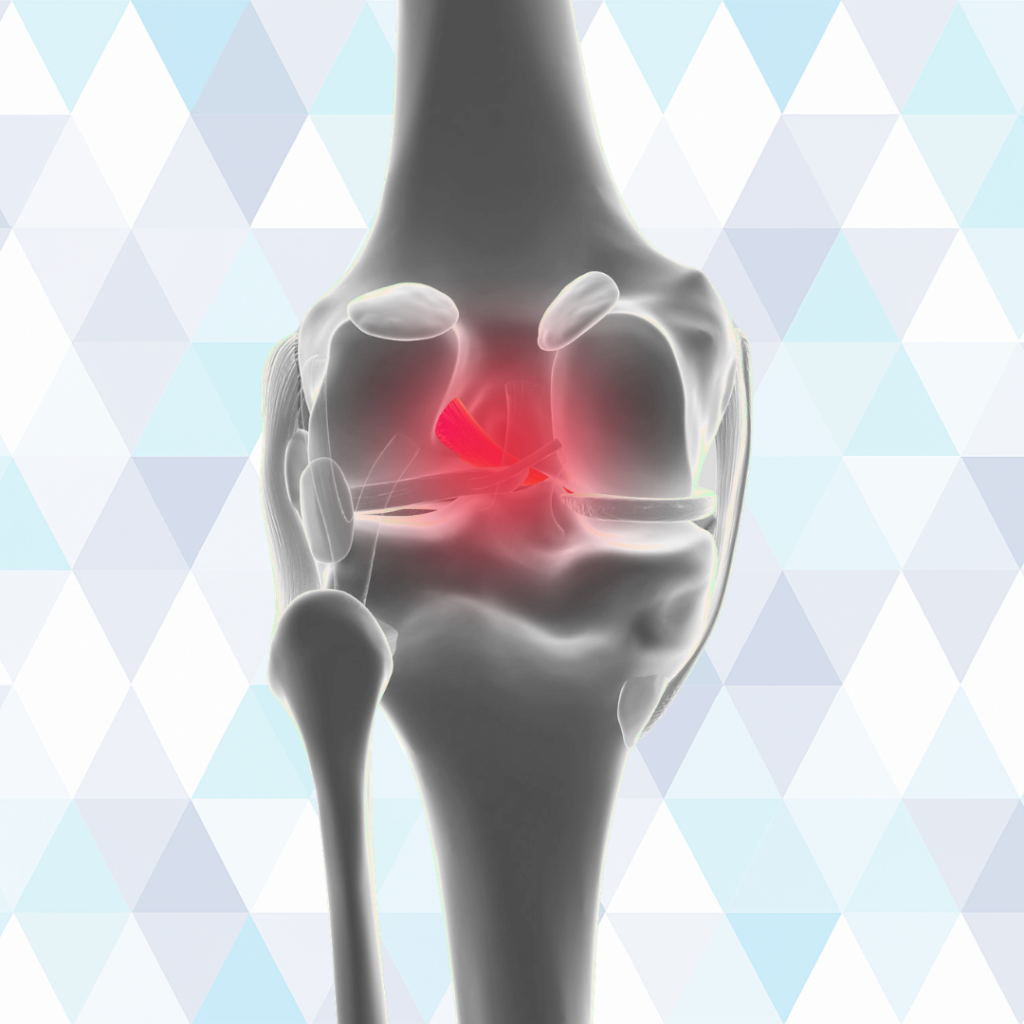
An anterior cruciate ligament (ACL) injury is one of the most common serious knee injuries, particularly in sports that involve sudden changes in direction or pivoting movements.
When the ACL is torn, the knee can become unstable and may give way during movement. Understanding the role of the ACL and the available treatment options can help guide appropriate management and recovery.
What is the ACL?
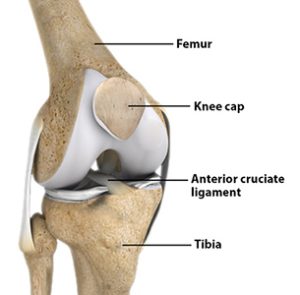
The anterior cruciate ligament (ACL) is one of the key stabilising ligaments located in the centre of the knee joint. It connects the thigh bone (femur) to the shin bone (tibia) and plays an important role in controlling knee movement.
The ACL helps stabilise the knee by:
- Preventing the tibia from sliding forward relative to the femur
- Providing rotational stability during twisting movements
- Supporting the knee during sudden changes in direction
Because of its role in controlling movement, the ACL is particularly important during sporting activities.
How ACL injuries occur
ACL injuries commonly occur during sports that involve pivoting, cutting or sudden stopping movements. Examples include football, soccer, netball and basketball.
The ligament may tear when the knee twists forcefully or when an athlete lands awkwardly from a jump.
When the ACL ruptures, patients often describe a sensation that the knee has “given way”.
Symptoms of an ACL tear
Symptoms of an ACL injury may include:
- A feeling that the knee is unstable or giving way
- Swelling within the knee joint
- Pain after the injury
- Difficulty returning to sporting activities
- Reduced confidence in the stability of the knee
Some patients experience instability during everyday activities such as walking or turning, while others mainly notice symptoms during sport or exercise.
Diagnosing an ACL injury
Diagnosis of an ACL tear usually involves a clinical examination of the knee combined with imaging.
An MRI scan is commonly used to confirm the injury and to assess whether other structures in the knee — such as the meniscus or cartilage — have also been affected.
Understanding the full extent of the injury helps guide treatment decisions.
Treatment options for ACL injuries
Treatment for an ACL tear depends on several factors, including:
- Age and activity level
- Degree of knee instability
- Associated injuries within the knee
- Future sporting goals
Some individuals with lower activity demands may manage their symptoms with physiotherapy and strengthening exercises.
However, many people who wish to return to sports that involve pivoting or cutting movements may require surgical reconstruction of the ligament.
ACL reconstruction surgery
Because the ACL has limited ability to heal on its own, the most reliable surgical treatment for a complete rupture is ACL reconstruction surgery.
During this procedure, the torn ligament is replaced with a tendon graft that acts as a new ligament.
The surgery is performed using arthroscopic techniques, which involve small incisions and specialised instruments to access the knee joint.
Bone tunnels are carefully created within the femur and tibia, allowing the graft to be positioned in the same location as the original ligament.
Tendon grafts
The graft is secured in place using specially designed fixation devices that provide stability while the graft incorporates into the body.
Over time, the graft develops its own blood supply and functions as a new ligament.
Dr Woodbridge commonly uses a hamstring tendon graft for ACL reconstruction.
Rehabilitation after ACL surgery
Recovery following ACL reconstruction involves a structured physiotherapy rehabilitation program.
Rehabilitation focuses on:
- Restoring range of motion
- Strengthening the muscles around the knee
- Improving balance and control
- Gradually returning to sporting activity
Because the graft takes time to incorporate into the body, rehabilitation is an important part of achieving the best possible outcome.
Patients are typically followed closely during recovery, and communication between the surgeon and physiotherapist can help guide progress.
Return to competitive sport is generally not recommended until approximately nine months after surgery, depending on individual recovery.
When to seek medical advice
Knee injuries that involve instability, swelling or difficulty returning to activity may indicate ligament damage.
Assessment by a qualified healthcare professional can help determine whether an ACL injury has occurred and discuss appropriate treatment options.
ACL Injury Assessment in Sydney, Taree and Forster
Patients experiencing knee instability or symptoms that may indicate an ACL injury may benefit from an orthopaedic assessment. Consultations are available for patients in Sydney, Taree and Forster, where diagnosis and treatment options can be discussed based on individual circumstances.