
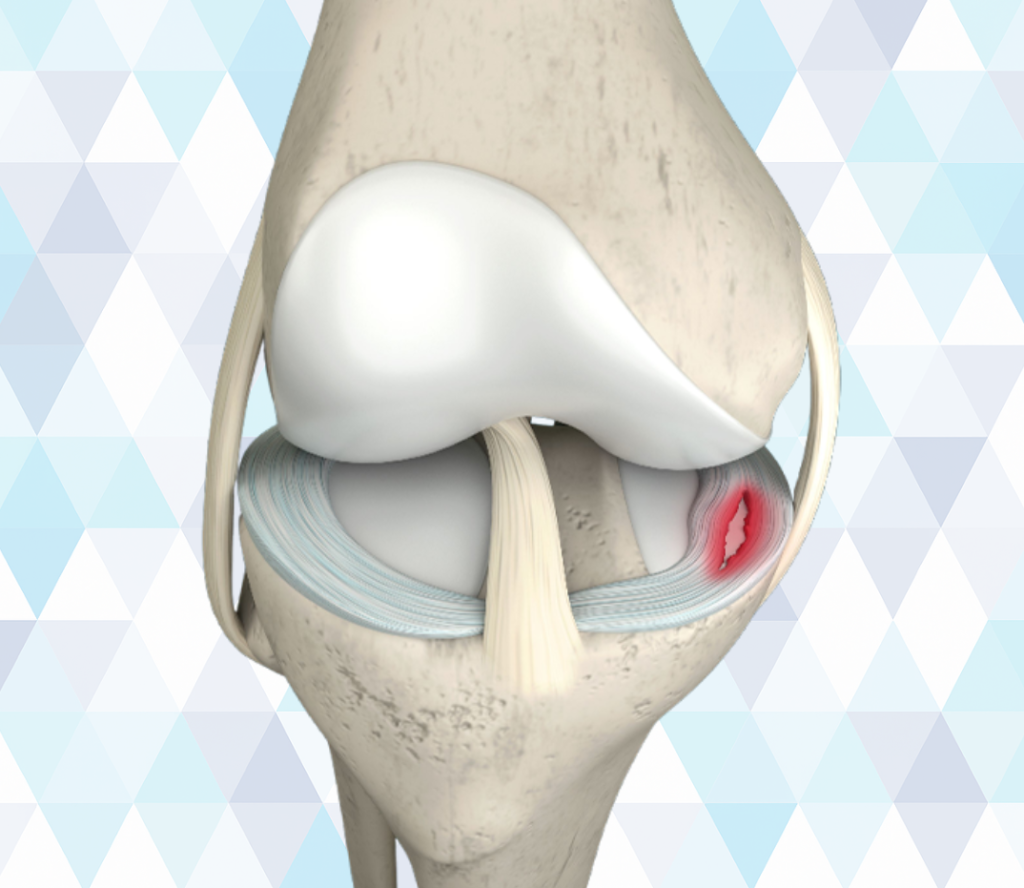
A meniscus tear is a common cause of knee pain and may occur during sporting activities, sudden twisting movements or gradually over time as the knee ages. Understanding how these injuries occur and the available treatment options can help guide appropriate management.
What is the meniscus?
The meniscus is a C-shaped piece of cartilage that sits between the bones of the knee joint. Each knee contains two menisci — one on the inner side and one on the outer side.
The meniscus plays several important roles in knee function. It helps distribute body weight evenly across the joint, acting as a natural shock absorber. This reduces pressure on the smooth joint surface known as articular cartilage, which covers the ends of the bones. The meniscus also contributes to the stability of the knee by helping the bones fit together more securely during movement.
What causes a meniscus tear?
Many people describe a knee injury as a “torn cartilage”, which in most cases refers to a meniscus tear.
Meniscus tears commonly occur when the knee twists while bearing weight, such as during sport or activities that involve sudden changes in direction. In middle-aged or older individuals, tears may also occur without a specific injury. These are often related to gradual degeneration of the cartilage tissue over time.
Symptoms of a meniscus tear
Symptoms can vary depending on the size and location of the tear but may include:
-
Pain in the knee
-
Swelling within the joint
-
Reduced range of motion
-
Clicking or catching sensations
-
Locking or difficulty straightening the knee
In some cases, swelling within the knee joint can lead to the development of a Baker’s cyst, which is a fluid-filled swelling at the back of the knee.
How a meniscus tear is diagnosed
Diagnosing a meniscus tear usually begins with a detailed discussion about symptoms and how the injury occurred, followed by a physical examination of the knee.
Imaging such as an MRI scan is often used to confirm the diagnosis and identify the type, size and location of the tear. This information helps guide decisions about the most appropriate treatment approach.
Why the location of the tear matters
Not all meniscus tears behave the same way. One of the key factors influencing treatment is the location of the tear.
The outer third of the meniscus has a better blood supply and therefore a greater potential to heal. In contrast, the inner portion receives nutrients mainly from the joint fluid and has a more limited ability to repair itself.
Understanding the pattern and location of the tear helps determine whether non-surgical management or surgical treatment may be appropriate.
Non-surgical treatment options
Many meniscus tears can be managed without surgery, particularly when symptoms are mild or related to degenerative changes.
Non-surgical treatment may include:
-
Rest and modification of activities
-
Ice and elevation to help reduce swelling
-
Pain relief medication where appropriate
-
A structured physiotherapy program to restore movement and strengthen the muscles around the knee
Physiotherapy can play an important role in improving knee stability, restoring range of motion and supporting recovery.
In some cases, an injection may be recommended to help reduce inflammation and manage symptoms.
Arthroscopic surgery for meniscus tears
If symptoms persist despite conservative treatment, knee arthroscopy may be considered.
Arthroscopy is a minimally invasive surgical procedure performed through small incisions using a camera to view the inside of the knee joint. Depending on the nature of the tear, treatment may involve:
-
Meniscus repair, where sutures are used to stabilise the torn tissue and allow healing
-
Partial meniscectomy, where unstable or damaged portions of the meniscus are carefully removed
The choice of procedure depends on the type of tear, its location, and individual patient factors.
Understanding meniscus root tears
In recent years, increased attention has been given to meniscus root tears. These injuries occur where the meniscus attaches to the bone at the back of the knee.
When this attachment is disrupted, the meniscus can lose much of its shock-absorbing function. In some patients, specialised surgical techniques may be used to repair the meniscus back to the bone.
Management depends on several factors including the condition of the knee joint and the presence of arthritis.
When to seek medical advice for knee pain
Meniscus tears are a common source of knee pain, but symptoms and treatment options can vary depending on the individual injury.
If knee pain, swelling, locking or catching sensations persist or interfere with daily activities, an assessment by a qualified healthcare professional may help determine the cause and discuss appropriate treatment options.
Meniscus Tear Assessment in Sydney, Taree and Forster
Patients experiencing symptoms that may be related to a meniscus tear can seek assessment with an orthopaedic surgeon. Consultations are available for patients in Sydney, Taree and Forster, where diagnosis, imaging and treatment options can be discussed based on individual circumstances.